Stone care guide
Should you seal natural stone floors, and how often?
By King of Stone · · 6 min read
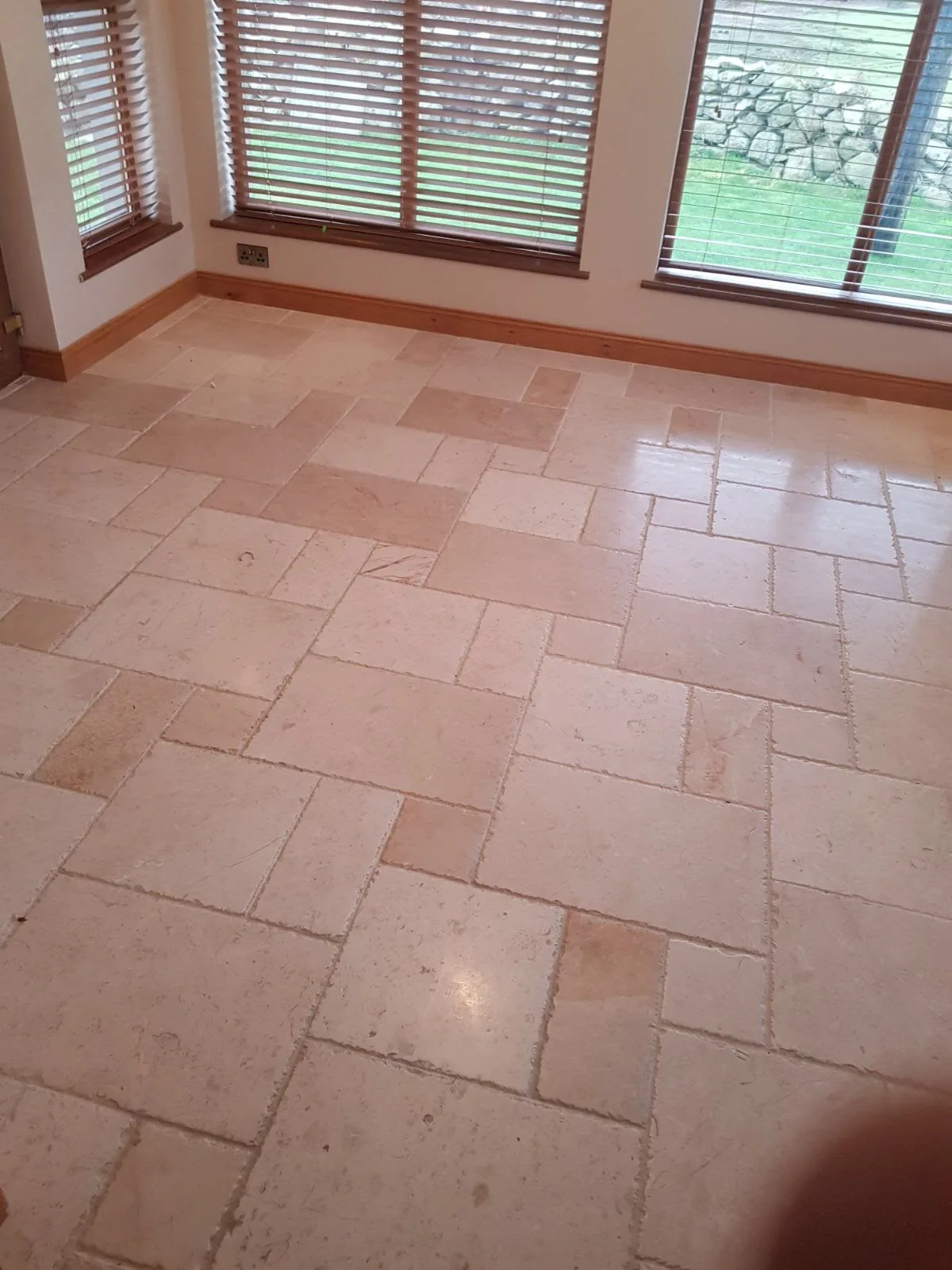
Short answer: most natural stone floors benefit from an impregnating (penetrating) sealer, especially porous stones such as limestone, travertine, honed marble and some granites. Sealing slows down staining; it does not make stone stain-proof and it does not stop acid etching. Most floors need resealing somewhere between every one and five years, depending on the stone, the room and how it is cleaned — and a simple water-drop test tells you when.
Which stones need sealing?
Natural stones vary widely in porosity, so there is no single rule. As a guide:
- Limestone and travertine are porous and absorb oil and coloured liquids readily. They almost always need sealing, particularly in kitchens.
- Marble is less porous, but honed marble and pale marbles such as Carrara can still absorb oil and staining. Polished marble absorbs less but is still usually sealed.
- Granite ranges from very dense (many dark granites barely absorb anything) to quite porous (some lighter granites). Testing decides whether it needs a sealer at all.
- Slate benefits from a penetrating sealer to protect against oil and to make cleaning easier.
- Terrazzo is usually sealed after polishing to protect the cement binder.
- Polished concrete is densified and then protected with a guard sealer.
Sealing a stone that cannot absorb it can leave a sticky or hazy residue on the surface. That is why we test first rather than sealing everything by default.
Impregnating vs topical sealers
Impregnating (penetrating) sealers soak into the pores of the stone and line them, so liquids are absorbed more slowly. Once cured, the surface looks and feels like the natural stone; some products slightly enhance or darken the colour if you want that look. They do not peel or scratch because there is no film on top.
Topical sealers and coatings form a film on the surface — acrylics, waxes and some “gloss” products. They can look good at first, but on floors they wear unevenly in traffic lanes, scratch, trap dirt and often yellow. Removing them later is extra work. For most interior natural stone floors we recommend impregnating sealers and getting the shine, if you want it, mechanically by polishing.
What sealing does — and doesn’t — do
- It slows absorption of water, oil and coloured liquids, giving you time to wipe spills up.
- It does not stop acids such as lemon juice, wine or limescale removers from etching marble, limestone and travertine.
- It does not fix existing stains, dullness or scratches. Those need cleaning, poulticing or honing first; sealing over them locks them in.
The water-drop test
This is the easiest way to see whether your floor needs sealing:
- Pick a few spots, including a busy area such as in front of the sink or a doorway, and a quieter area for comparison.
- Put a few drops of water on the stone and leave them for about 10–15 minutes.
- Wipe them off. If the stone has darkened where the water was, it is absorbing and the sealer has worn — time to reseal. If the water beads and the stone is unchanged, protection is still working.
For kitchens you can repeat the test with a drop of cooking oil, which shows oil-resistance specifically. Always wipe it off afterwards and use a spot that is out of sight.
How often should you reseal?
These are typical ranges rather than fixed rules; the water-drop test is the real guide.
- Kitchens: roughly every one to three years, because of cooking oils, spills and frequent cleaning.
- Hallways and entrances: roughly every two to four years, depending on traffic.
- Bathrooms and showers: roughly every one to three years in showers, longer for bathroom floors that stay dry.
- Living areas and bedrooms: often three to five years.
Harsh or acidic cleaners strip sealers faster. Using a pH-neutral stone cleaner is the simplest way to make sealing last longer.
Can you seal stone yourself?
Yes, if the floor is clean, dry and in good condition. The key is preparation: any dirt, residue or old coating needs removing first, the stone must be completely dry, and excess sealer must be buffed off within the time stated on the product so it does not leave a haze. If the floor is already stained, dull or patchy, professional cleaning or restoration before sealing will give a far better result.
How is professional cleaning and sealing priced?
Projects under 100 m² are priced per job as a fixed quote; projects over 100 m² are priced per m². Send photos of the floor and tell us the stone type if you know it, and we will tell you honestly whether it needs a clean and reseal or something more.
See our stone cleaning and sealing service, and our limestone and travertine restoration pages.
Frequently asked questions
Do all natural stone floors need sealing?
Most do, especially limestone, travertine, honed marble and lighter granites. Some dense granites barely absorb anything, so we test before recommending a sealer.
What is the difference between impregnating and topical sealers?
Impregnating sealers soak into the stone and leave no film, so they do not peel or scratch. Topical sealers form a surface coating that tends to wear unevenly, trap dirt and need stripping later.
How do I know when my floor needs resealing?
Do the water-drop test: leave a few drops on the stone for 10–15 minutes and wipe them off. If the stone has darkened, it is absorbing and needs resealing.
Does sealing stop marble or limestone etching?
No. Sealers slow staining but do not stop acids reacting with calcium-based stone. Etching is removed by honing and polishing.
How is cleaning and sealing priced?
Projects under 100 m² are priced per job with a fixed quote; projects over 100 m² are priced per m².