Stone care guide
Travertine holes and pitting: filling and restoring a travertine floor
By King of Stone · · 6 min read
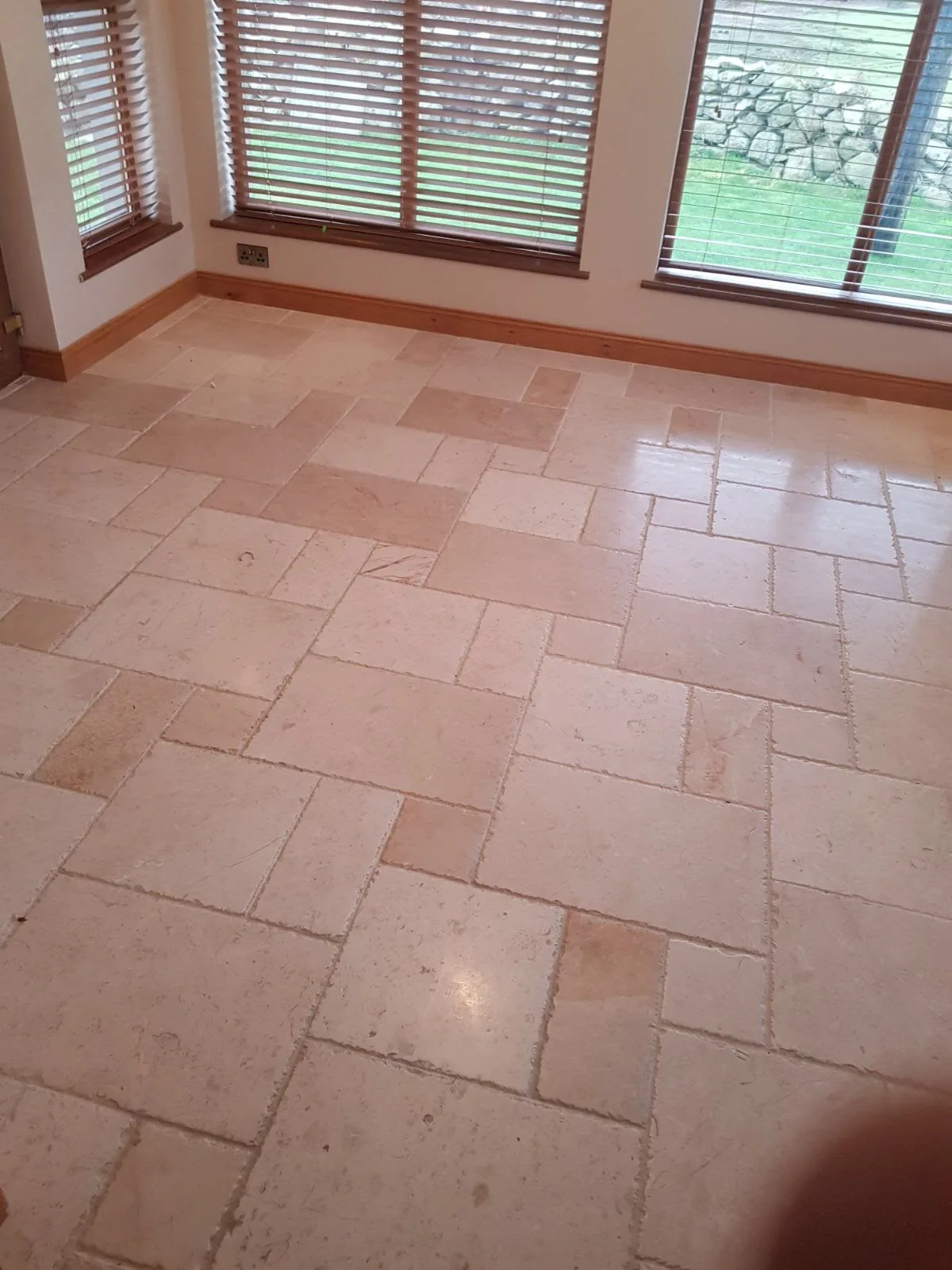
Short answer: holes appear in travertine because the stone naturally contains voids, and the filler put in at the factory wears away over time. The fix is to clean the holes out, refill them with a colour-matched filler — resin or cement-based, depending on the stone and the room — then hone the floor flat and seal it. Most travertine floors can be restored this way without replacing any tiles.
Why does travertine have holes?
Travertine is a form of limestone that forms around mineral springs. As it builds up, gas and water leave cavities through the stone, which is what gives it its character. When travertine is cut into tiles, those voids are exposed. Most interior travertine is sold “filled”: the factory presses filler into the holes and hones the surface flat.
That factory filler is usually thinner and softer than the stone. Over years of foot traffic, cleaning and the occasional dropped object, it wears down and pops out, and the holes reopen. Tumbled travertine is a slightly different case: it is often sold with open or partly open holes and a rounded surface, so dirt naturally collects in its texture.
Why open holes are a problem
- They trap dirt, grit and cleaning residue, so the floor looks grubby even after mopping.
- In kitchens they collect crumbs and grease; in bathrooms they hold water and soap scum.
- Grit lodged in holes is dragged across the surface, scratching the stone around them.
- Edges around larger holes can chip further if left open.
Pitting vs etching vs wear
It helps to separate three things owners often describe as “pitting”:
- Open holes — natural voids whose filler has gone. These are refilled.
- Etching — dull, rough marks where acids (cleaners, wine, citrus) have dissolved the surface. Travertine is calcium-based, so it etches like marble. These are honed out.
- General wear — scratching and dull traffic lanes. Also honed and refinished.
Most worn travertine floors have some of all three, and a full restoration deals with them together.
Resin vs cement-based filling
There are two broad families of filler, and both have their place:
- Resin fillers (epoxy or polyester-based, tinted to match) bond strongly, cure hard and are good for larger holes, edges and areas that see heavy wear. They are tinted on site to match the stone. Some resins can discolour in strong sunlight, so product choice matters in conservatories and next to large glazed doors.
- Cement-based fillers (often grout-type products with fine powder, coloured to match) are closer to the traditional factory fill and suit many interior floors and wet areas. They are easy to colour-match to travertine’s warm tones.
We choose the filler for each floor after looking at the colour, the size of the holes, the room and the light it gets. Either way, the holes are cleaned out first so the filler bonds properly, filled slightly proud, allowed to cure, and then honed flush with the stone.
What a full travertine restoration involves
- Deep clean of the stone and grout to remove ingrained dirt and old residues.
- Filling open holes and chipped edges with colour-matched filler.
- Honing with diamond pads, used wet, to flatten the filled surface, remove etching and scratches, and create an even finish.
- Finishing to your chosen sheen.
- Sealing with an impregnating sealer to slow staining and make cleaning easier.
Filler needs time to cure before honing, so a floor with many open holes usually takes longer than a straightforward re-hone. Furniture needs to be cleared, but the process is wet and the slurry is collected as we go, so there is very little dust.
Honed or polished?
Honed travertine has a smooth, matt or soft-satin surface. It is the most popular choice in homes because it hides wear and light etching, and it offers better grip — which matters in kitchens, bathrooms and wet rooms. Polished travertine is brighter and more formal and shows the colour and pattern strongly, but it shows scratches and etching more and is more slippery when wet. It suits hallways and reception rooms better than wet areas.
A test area is the easiest way to decide. Outdoor travertine patios are never polished: they are cleaned, refilled where needed and sealed with an external-grade product.
Keeping travertine in good condition
- Clean with a pH-neutral stone cleaner; avoid acidic, bleach-based or limescale products.
- Use doormats to catch grit at entrances.
- Check the sealer with a water-drop test and reseal when the stone starts absorbing.
- Deal with newly opened holes early, before dirt packs into them.
How is travertine restoration priced?
Projects under 100 m² are priced per job as a fixed quote; projects over 100 m² are priced per m². Send photos, including a close-up of the holes, and we will advise whether the floor needs filling, honing or a full restoration.
See our travertine restoration service and our guide to sealing natural stone floors.
Frequently asked questions
Why are holes appearing in my travertine floor?
Travertine contains natural voids that are filled at the factory. That filler wears away with traffic and cleaning, so the holes reopen and collect dirt.
Is resin or cement filler better for travertine?
Both have their place. Resin is strong and suits larger holes and edges; cement-based filler is close to the original factory fill and suits many interior floors. We choose after looking at the stone, the holes and the room.
Do travertine tiles need replacing if they have holes?
Usually not. Holes are cleaned out, refilled with colour-matched filler and honed flush, which restores a flat, closed surface.
Should restored travertine be honed or polished?
Honed suits most homes and wet areas because it hides wear and has better grip. Polished is brighter and suits hallways and reception rooms.
How is travertine restoration priced?
Projects under 100 m² are priced per job with a fixed quote; projects over 100 m² are priced per m².